A certificate requested again, an authority to act that needs checking, a contract delayed because an updated document is missing. In business relationships, time is often lost before work even begins. European Business Wallets aim to simplify part of this exchange: business identity, verifiable documents, signatures and digital representation.
For a company, the useful question is what could change in its processes: which information would no longer need to be requested repeatedly, who could share it and how it would reach the systems managing customers, suppliers and cases. We examine the project’s status on 24 November 2026 and the organisational decisions businesses can address today.
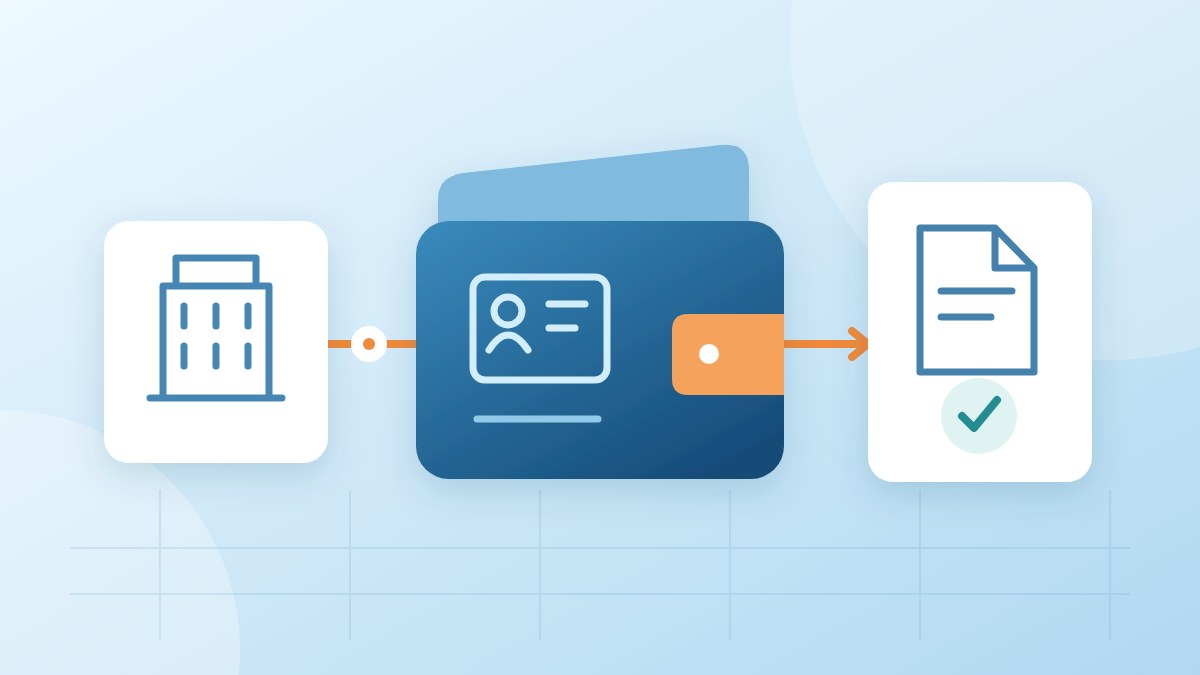
A European Business Wallet is a proposed tool for identifying an organisation and exchanging trusted information with other businesses and public authorities. The European Commission’s overview, updated on 20 November, describes planned capabilities including sharing verified documents, electronic signatures and seals, delegation and secure communications.
Here, “wallet” does not mean a cryptocurrency wallet. The purpose is to make identities and attestations usable in business interactions. The project builds on the architecture of European digital identity wallets; it should not be confused with a personal app already usable for every business procedure.
The Council adopted its negotiating position on 9 June 2026. Documents for the Telecommunications Working Party meeting on 24 November still include preparation for the trilogue on the regulation. That documents a legislative step, rather than a general launch of the service.
We therefore do not present the Business Wallet as a requirement already applicable to all companies. The Commission describes business adoption as voluntary under the proposed initiative. The final text, technical requirements and service availability will need checking before an integration can be planned. Preparing does not mean buying a supposedly mandatory solution today.
The interesting prospect is reducing repetitive checks. When an organisation receives an attestation in a verifiable format, its process can better distinguish the issuer, the subject and whether it remains valid. A trusted document does not, however, decide whether a supplier is suitable for a particular contract.
The same distinction applies to representation: identifying a person and checking their authority to act for a company are different controls. When designing a workflow, we should define at least:
These are process design criteria, not final technical specifications for the future wallet. Signing, archiving and legally required document preservation also need assessment against the document and applicable requirements: a new exchange channel does not automatically resolve every obligation.
Consider a hypothetical example: a manufacturing company needs to qualify maintenance suppliers. Today, it emails a document checklist, receives attachments, updates a spreadsheet and asks for clarification about expiry dates. A colleague repeats the check before placing an order.
A better integrated process could assign each supplier a unique identity, collect only relevant evidence, record check outcomes and show missing information. Where available and supported, attestations from a Business Wallet could feed that workflow. Contract requirements, technical assessment and purchasing decisions would remain separate.
The benefit would not come simply from replacing email with another app. It would depend on putting verified information in the right place without retyping it or losing its connection to the case. This is a business systems integration issue as well as a digital identification issue.
Business management software holds orders, terms and transactions; a portal organises requests, deadlines and interactions. The wallet would play a different role in exchanging identity information and documents. Connecting these elements requires rules: which system updates the supplier record, who resolves a conflict and which outcome allows a case to move forward.
To avoid rewriting everything as services and standards evolve, we can separate the business process from the connection to a particular technology provider. Integration interfaces must be based on documentation actually available, rather than imagined APIs. Meanwhile, custom software can organise the necessary workflow while keeping future connection points explicit.
Preparation mainly means understanding where checks are repeated and who maintains reliable information. We suggest five focused activities:
These activities retain value even if the wallet arrives later or does not cover every required document. They help distinguish what can improve now from what depends on the European initiative.
At Tredipi, we start with work steps, data and the systems involved. We can help rationalise document collection, design portals and application integrations, and assess new opportunities when requirements and interfaces can be verified. We do not present the Business Wallet as an existing Tredipi product or a guarantee of compliance.
If customers and suppliers repeatedly have to resend the same information, the first useful step is to map that journey. Explore where work breaks down between CRM, business software and finance, or contact Tredipi with a document workflow that currently takes too many steps. Together, we can identify what to simplify now and what to prepare for the future.