The ERP works, but orders are still copied by hand. Documents are in the cloud, yet retrieving them without the provider would be difficult. The company wants AI, but information is scattered across applications and folders. These are different problems with a common question: how much freedom do we have to improve the systems our business runs on?
The Department for Digital Transformation’s announcement of 16 November 2026 reports CITD approval. The Strategy concerns public administration and is expected to take effect in 2027, following the Unified Conference process. Its priorities are technological autonomy, federated infrastructure, modernisation and AI capacity. The official announcement explains the objectives and institutional process in Italian.
The Strategy also offers a useful prompt for the private sector. We draw five lessons for businesses from its four objectives: our practical interpretation, not new obligations for companies. We support the direction, but its value depends on how it is applied to everyday work.
A business can use excellent cloud services while still having no clear understanding of how to retrieve its data, who controls administrative credentials or what replacing an application would cost. Making these connections visible is the first step towards greater freedom of choice.
Control can be tested through practical questions. Is there an inventory of dependencies? Can data be exported in a usable format? Are configurations and procedures documented? Who is responsible for access, updates and renewals? Has a restore actually been tested?
A European supplier address and access to source code are factors to assess, not sufficient proof of autonomy or security. An open-source project without the skills needed to operate it can become an equally fragile dependency. A managed service can be a reasonable choice when its constraints and responsibilities are understood.
Our approach is pragmatic: choose services that help the business and know how to respond if circumstances change. Our guide to cloud vendor lock-in and data portability explores the risk of becoming tied to a provider.
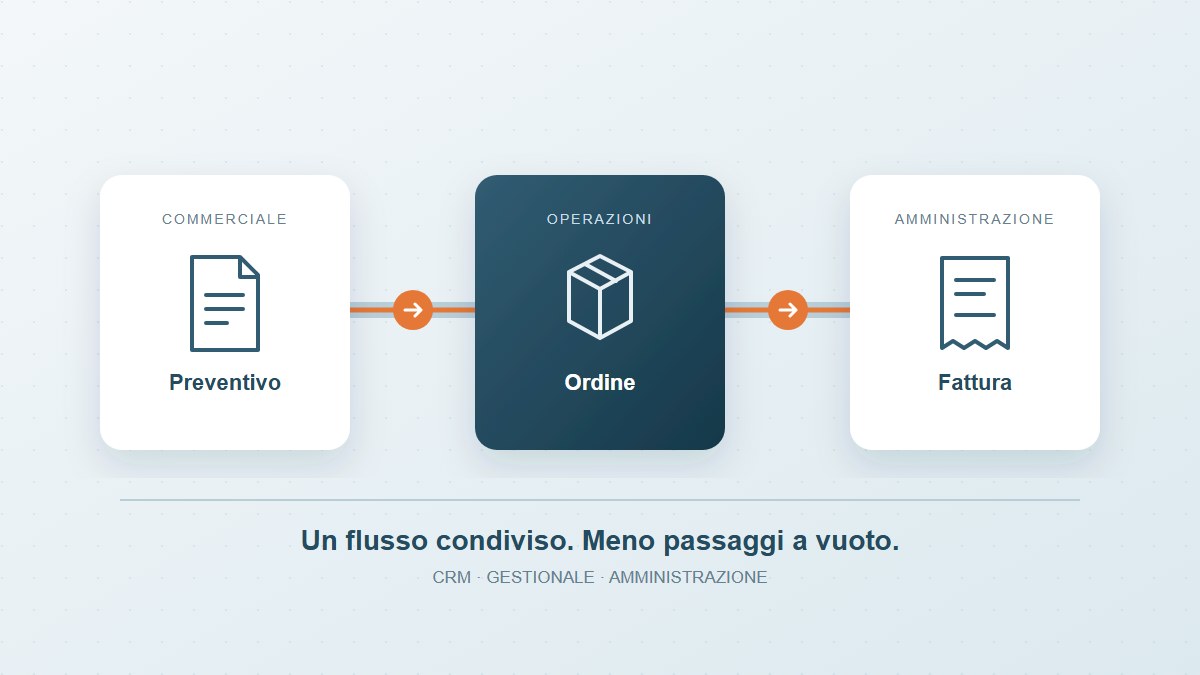
For a business, cooperation between systems can translate into a practical choice: make existing tools work together. An ERP holds jobs and orders, a CRM holds customer relationships, and a field application collects operational data. Problems emerge when people have to copy information between them.
The lesson for a business is straightforward: decide which information must flow, which system keeps it current and who intervenes if a transfer fails. Business systems integration is valuable when it makes a working process reliable, rather than simply adding another connection.
Complexity for its own sake is the risk to avoid. Spreading applications across environments requires identity management, monitoring and operational skills. A second cloud is not automatically a continuity strategy: applications and data must actually be able to work in the alternative environment.
A migration can leave slow software and manual work untouched. Before investing in new infrastructure, identify what is actually slowing work down. Sometimes an application needs moving; sometimes the way it communicates with other systems needs fixing.
Consider a hypothetical example: orders arrive through a portal and an employee enters them into the ERP. Here is how we would approach the work at Tredipi:
This illustrates a method, not a customer case or a promise of savings. It shows why targeted integration can have a different priority from complete migration. If interruptions are the problem instead, restoration and failure handling may be the first areas to address.
Costs and benefits should also account for support, data transfer, test environments and future maintenance. Our cloud solutions and IT infrastructure migration pages describe these areas of work.
Imagine helping a support team find answers in company manuals. Before selecting an AI model, establish which documents are current, who may read them and how to distinguish a supported answer from one requiring review.
A first test could collect recurring questions, compare answers with expected responses and check that the system identifies sources and respects access permissions. This is a possible approach: the outcome needs testing against the company’s documents and requirements.
Buying computing capacity does not fix inconsistent information or unclear permissions. In AI adoption work, the choice between external services and dedicated models should be connected to the task, the data to protect and the skills needed to operate the solution.
The lesson connecting the others is the ability to change without rebuilding everything. Assess a new service for how it integrates, who can maintain it and what will happen as requirements grow.
For a business, this means choosing a first area to work on, agreeing what should improve and deciding whether to extend the project based on the trial. A useful roadmap makes priorities and responsibilities clear; it is not a shopping list of technologies.
If your provider’s prices, terms or availability changed tomorrow, how much freedom would your business have to choose? There is no need to change everything: the first step may be to clarify where risk is concentrated or which part of the work needs attention.
At Tredipi, we support businesses in analysing existing systems, integrating applications and building software and cloud solutions. We bring these skills together to assess a problem and turn it into practical work.
Want to understand where to start? Tell us which software you use, where work breaks down and what you want to improve: we can help identify the issues and assess a useful first change.
Microsoft’s Cloud Adoption Framework explores the connection between cloud strategy and measurable business objectives. It is complementary technical reading, separate from Italy’s Cloud Strategy.