Those who know the world of startups will know very well that the failure rate is very high and is around 90%. The reason for such a high failure rate, in the vast majority of cases, is due to an incorrect working methodology, which contemplates the old idea of having to place only finished products or services on the market.
It is within this failed dynamic that the name of Eric Ries fits. For many he may not be well known but in reality his name is linked toone of the most innovative approaches of recent years, which has found multiple fields of application by virtue of the ability to mitigate the traditional negative effects that weigh on startups.
Eric Ries, in addition to having a history as a young entrepreneur, is the author of a fundamental book such as Starting Lightly: the Lean Method Startup, where he illustrates his intuition of an innovative approach to the development of a new idea, to be transformed into a product or service, attractive for the market.
One of the most interesting concepts introduced in the book by Eric Ries is the war on web waste, on which the entire Lean Startup methodology is based and which also represents the basis on which the different phases of the method are developed.
But what is the Lean Startup and how does it work? There are many examples that we could give today, given the notable diffusion of this new approach, however the effectiveness of the method developed by Eric Ries can only be fully understood by knowing what is (or what was) the classic approach of a startups that tries to position its product or service on the market.
Traditionally, in fact, startups tend to work on the initial idea by going deep depth, leveraging one's belief that the idea is correct and that it will certainly be successful. Except then having to deal with the real market and realizing that you had worked for months on something that no one saw the need for. Here you are then everything turns into a useless waste of time, money and resources. This is why Eric Ries talks about the "war on waste".
How is the model proposed by the American entrepreneur who coined the term developed? From a structural point of view, 3 development phases can be identified but the entire process can only be understood in light of the concept of Minimum Viable Product (MVP).
Literally translated, the concept is that of minimum usable product. That is, Eric Ries maintains that to overcome the limits of the startups and avoid the waste of resources that we mentioned above, the best path is that of gradual development, based on the development/learning combination. Basically, the entire project is divided into multiple small parts to be developed gradually and only in light of the real response of the public.
When you think about developing a mobile app, as startup projects often find expression, the classic approach is to rely on a software house specialized in customized software and have a 100% finished product created. This means having to wait a long time and having to invest a lot of resources before even having the certainty that the market response is positive.
The Lean Startup method, as already mentioned, proposes the development of portions of the overall project, to be validated through the proposal to users/customers. After all, what would be the point of investing time and resources on something that no one wants to use?
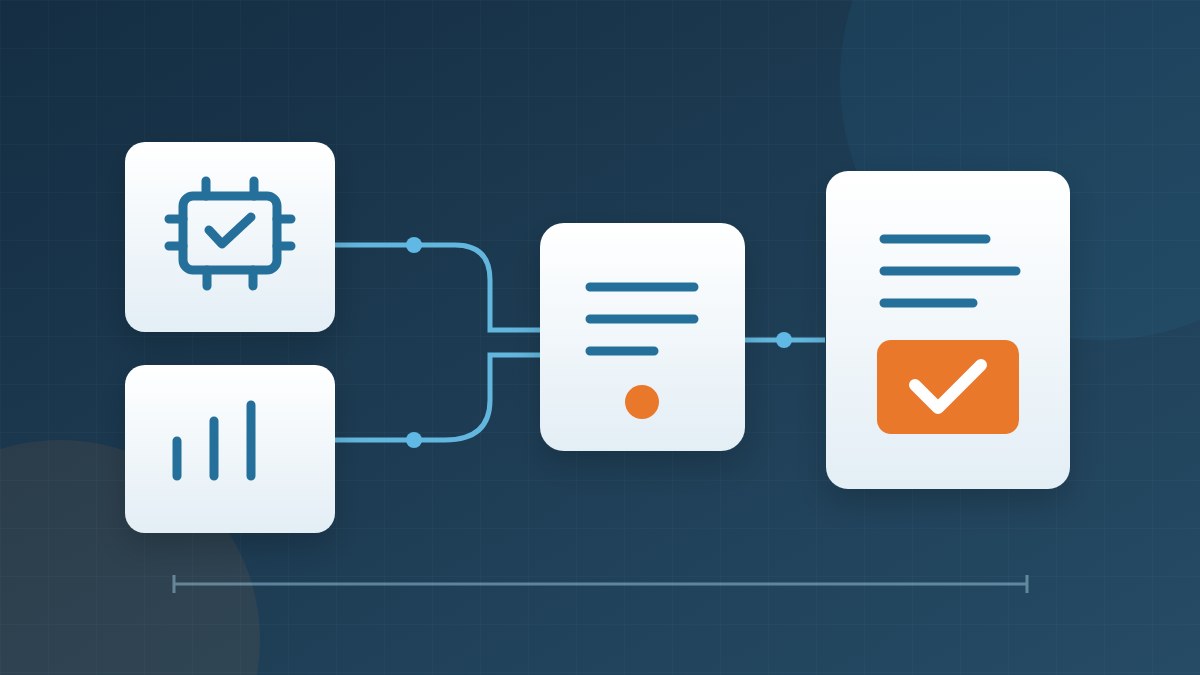
The effectiveness of the Lean Startup method is due to its 3 constituent phases, which give life to a recursive cycle where each phase, if validated, automatically leads to the next one, without interruption. The 3 phases are: the idea, the product, the data. Expressed less succinctly, it involves starting from an initial idea, a portion of it for truth, develop it into a real product, offer it to the target of users of your project and collect the data that can be obtained from the same use. If the data is positive, then we return to the idea phase and proceed with a new development phase, and so on until complete positioning on the market.
Let's imagine the development of a mobile app dedicated to events. The first step could be to show a list of all events divided by Region. If the idea is appreciated, a card could be introduced for each event. Then integrate a booking system. Then introduce payment via app. And so on until a more complete idea is completed.
In this way, the resources used are decidedly less expensive than those necessary for the development of an entire project. Furthermore, during the data analysis phase, the feedback can be positive, so we proceed in the circular movement, or negative. In this case there are two options: stop the entire project or read the feedback and understand how to direct your choices to satisfy market demands.