A customer asks if a product can be used in a certain condition. The answer exists: it is in a technical manual, or in a procedure updated a few months ago. Before responding, however, you need to find the right file, understand if it is still valid and ask for confirmation from the person who knows the topic. Work stops while information stays in place.
A AI assistant on business documents can help reduce this process: it allows you to formulate a question and consult the relevant information through an answer accompanied by sources. The point is not to add a chat to a shared folder. It is to make the company's wealth of knowledge usable, with clear responsibilities and verification criteria.
“We would like to use all our documents with AI” is an intention, but it does not yet define a project. It is more useful to identify who is looking for an answer, at what time and with what consequences if the answer is incomplete. The salesperson consults conditions and product sheets; assistance seeks intervention instructions; a new colleague must navigate internal procedures.
Choosing one of these situations allows you to limit the sources, involve a competent contact person and compare the system with the way we work today. To establish the initial perimeter we can start from the criteria described in the guide above how to choose the first AI project in an SME.
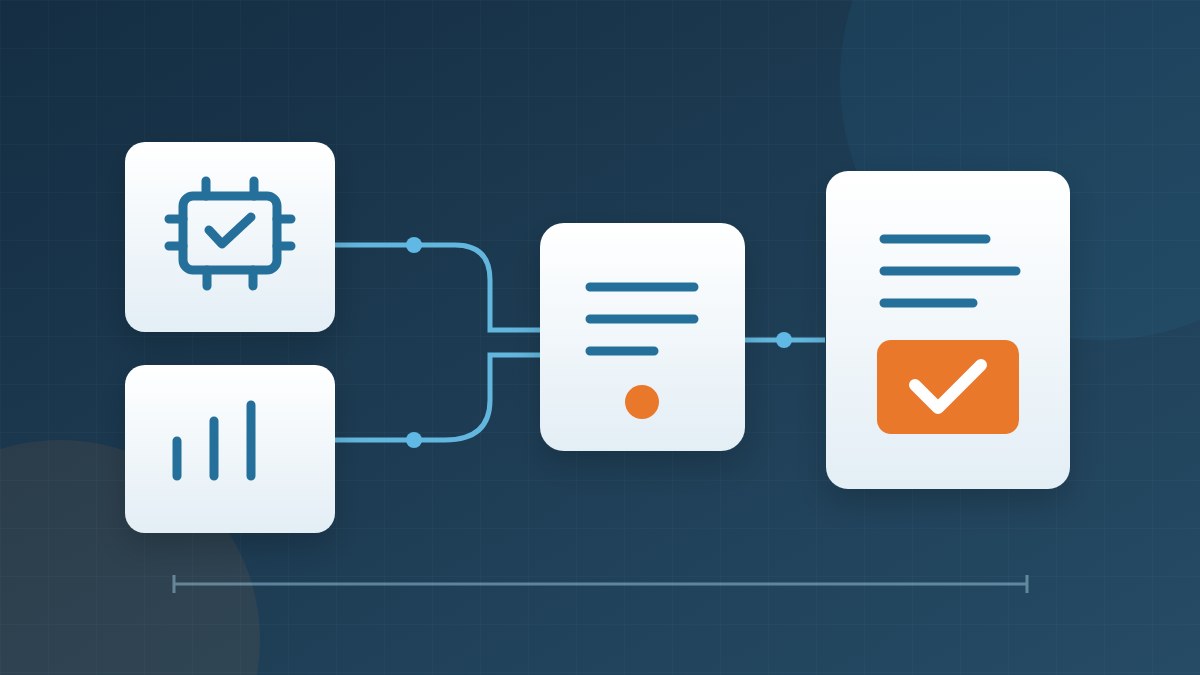
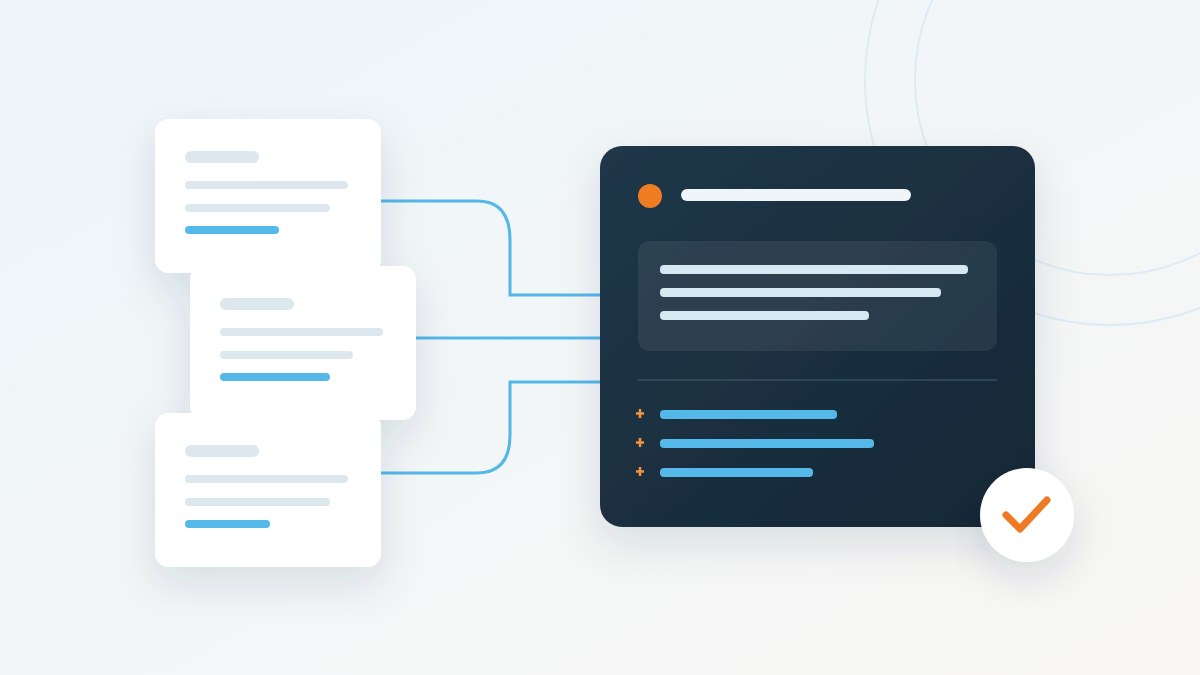
A frequent solution is the RAG, information retrieval augmented generation: The system searches for relevant passages in the linked sources and provides them to the model along with the question. The model then constructs a response based on the recovered material. This approach does not, in itself, require you to retrain the model on every business document.
Search and generation are two distinct steps. If an outdated version of a procedure is retrieved, a well-written answer may still be wrong. If the necessary step is not found, the system must make the limitation clear and indicate how to investigate further, without filling the gap with a plausible statement.
Let's imagine this hypothetical example: a company distributes components and wants to help support consult approved manuals and instructions. An operator asks: "What checks are required before replacing the X series component?".
The answer should summarize the relevant steps and show the link to the manual, the section and the revision used. The operator must be able to open the document and verify the context. If the documents contain incompatible instructions, it is useful to report the conflict and involve the technical contact person. A quote in the answer alone does not prove that the conclusion is correct.
In this scenario the assistant supports the consultation. It does not authorize interventions, does not replace safety procedures and does not make decisions in place of the responsible figures.
You don't need to reorder the entire archive before starting. The chosen subset must be made reliable. For each source it is useful to know who is responsible for it, which version is valid, when it applies and which documents it replaces. A scanned PDF, a complex table or a diagram requires specific checks: extracting text does not mean it has correctly preserved its meaning.
It is best to start with a limited collection of approved manuals or procedures. Duplicate documents, drafts and obsolete instructions must be recognized and managed. The assistant can help you find the information, but does not independently decide what the company's official procedure is.
An employee who cannot read a document should not receive its contents via chat. Checking should be applied to the information retrieval and sources provided to the model, not just the links shown at the end. Writing “do not disclose confidential data” in the prompt does not replace application authorization.
The project must also define the management of conversations, data storage and the conditions of the service used. A dedicated infrastructure may be appropriate for some needs; the choice depends on the data and real constraints, without assuming that a commercial label automatically makes any configuration safe.
A procedure replaced today should not continue to guide responses tomorrow. It must be established how changes, cancellations and access revocations are implemented, and what delay is acceptable. These conditions must be proven, including any copies and caches.
It is also important to distinguish documentary knowledge and operational data. A manual can explain how to manage stock availability; To know the current availability you need a reading authorized by the system that governs it. They are integrations with different responsibilities, to be designed together when the use case requires it.
Before expanding use, we prepare a set of real questions and expected answers, verified by company representatives. We also place unanswered questions in documents, ambiguous requests, conflicting versions, and attempts to obtain unauthorized information. Let's measure at least:
Acceptable thresholds depend on the consequences of an error. We can set them before the test and evaluate the results without confusing a convincing demonstration with a service ready for everyone. Even i costs of AI must be related to the work actually completed and verified.
The first step can be simple: choose a group of people, a collection of documents and some questions that often interrupt work today. From there we can evaluate access, quality of sources, integrations and testing criteria, before deciding on tools and dimensions of the solution.
With the initial evaluation Tredipi AI we can focus on a concrete perimeter and the aspects to be explored further. If the answers exist in the company but finding them always depends on the same people, tell us where the search stops: together we can identify a first use that is useful, controllable and consistent with your way of working.
For technical principles: Microsoft Learn: RAG and information retrieval e Microsoft Learn: Security filters in search. Sono riferimenti architetturali; la scelta della piattaforma e dei controlli richiede una valutazione del singolo progetto.