In recent years, various companies of all sizes, active in all sectors, are increasingly providing digital tools to their staff. Today, more than half of the employees of medium-sized companies have access to a computer with Internet access. Digital tools bring many significant benefits forbusinesses.
Digitalization reduces transaction costs, providing better and faster access to the circulation of information and communication between staff, suppliers and other networks of contacts. Digitalization, among the various objectives it can pursue, is also capable of helpingsmall and medium-sized enterprises (SMEs) to integrate into global markets, through the reduction of costs associated with transport and operations across national borders, as well as significantly improving the scope of services commercial. It facilitates access to resources – including financial ones –, training and recruitment channels and government services, which are almost always available online. Business digitalization also supports innovation and greater access to new assets, and exponentially increases the potential for businesses to generate data and analyze their operations through new, cutting-edge methods, to improve performance.
Yet, despite the advantages and opportunities that derive from the digitalization process, and the significant diffusion and increase in the number of digitalized companies in recent years, many SMEs still struggle to achieve the digitalization of their processes. In fact, in smaller SMEs, with 10-40 employees, the digitalization gap compared to larger companies has grown considerably in the last decade. Indeed, in many countries, such as Greece, Hungary, Poland, Portugal, and Turkey, where the average share of employees with connected computers in small businesses remains at or below 40%, progress has stalled, while in large businesses in countries such as Denmark, Finland, and Sweden, the rate of corporate digitalization stands at around 80%, if not more.
Digitalization is an important driver of productivity growth and, in turn, of growth of wages, therefore these gaps have done nothing but contribute to increasing inequalities between people, places and businesses.
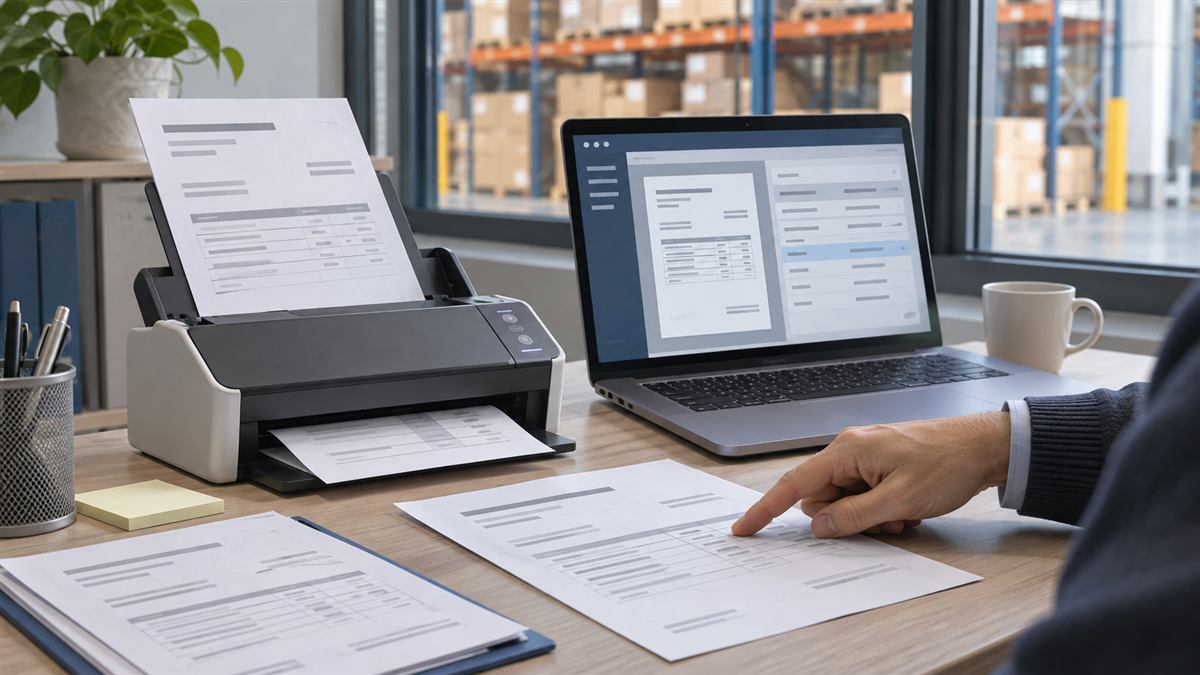
In order to fully understandthe advantages provided by a corporate digitalisation process, it is important to understand what this word means, and everything that constitutes the aforementioned process. Many think that digitalization is only that of documents, when in reality it is something that goes beyond simple data recording. Of course, digitizing all the paperwork and correspondence that circulates inside and outside the company is certainly important, it helps to make the circulation of information much more fluid, it makes the conservation of documents, especially important ones, and registers much more efficient, compared to physical and analogue media that often get lost in company archives. Finally, there is also an important advantage for the environment, namely the reduction in paper consumption, since all employees can access documents directly from their PCs and mobile devices. So yes, the digitization of documents is one aspect, and a very important one at that, but it is not the only one. The digitalisation processes also include:
The biggest challenge, for many SMEs, is the first step towards both complete and partial digitalisation. Once the initial transition todigital technologieshas begun, there are strong complementarities in technologies that can lead to full adoption. To make this transition, SMEs tend to leverage various systems, and different forms of support and consultancy. This is partly due to the desire to compensate for weak internal capabilities, and in the rest it is attributable to economic reasons. Digital platforms, such as social networks and e-commerce, provide significant support for optimizing certain operations at very low costs, through processes such as data analysisand business intelligence. Similarly, to manage digital security and contain the risks connected to it, SMEs capitalize on external consultants or on the same security systems of the digital products andservices they use. Some SMEs also find solutions by using artificial intelligence, in order to learn information on the markets, and are always looking for new AI with more efficient. Other effective solutions consist of the implementation of useful mobile apps and management apps.