A crossroads that in recent years has become mandatory for any company involved in organizing its work. Until a few years ago, the problem of choosing between one solution or the other did not arise: cloud computing was still faced with too many disadvantages to be a viable option. But today the situation has completely changed: a real revolution is taking place, which seems clear for a company like Trepidi Srl, founded in 2015, when the experience with company software was characterized by local installations. To better understand the advantages offered by cloud solutions, it is good to clarify the meaning of the expression "on premise".
The on premise software are nothing more than the programs installed locally, on computers physically present in the company or in the office: previously we preferred to speak of "local installations", today "on premise".
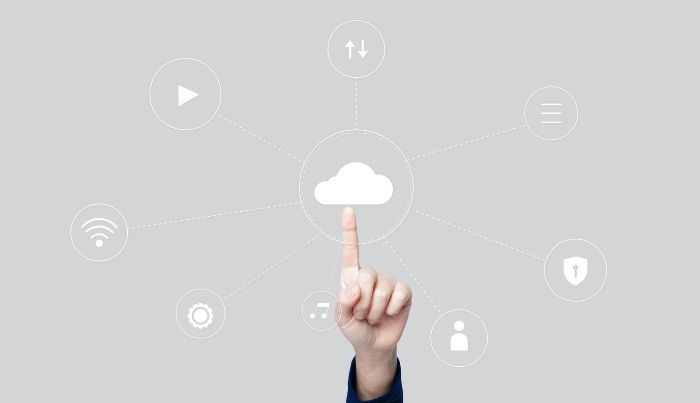
On the other hand, cloud solutions are those that do not require installation on devices present in the company but accessible remotely thanks to an internet connection. This implies that the software is hosted on dedicated servers, or in any case on machines that physically reside elsewhere than the company headquarters, and which are owned by third parties and managed by them.
Why this last clarification? Because actually, beyond the on premise vs cloud software dichotomy, it must be said that another solution could be that of the on-premise data center. In the latter case we mean a group of privately held and controlled servers, therefore private data centers that companies host at their headquarters and must manage independently. Autonomously could be the greatest disadvantage, which usually leads companies to prefer the disadvantages of cloud computing. The management of a data centers or a server is not a trivial matter: it requires specialized personnel who have system skills and who are always available to intervene if a problem arises which may be more or less serious. The risk, therefore, if the management system is not organised, is to leave the entire company machine stranded.
To this we should then add the costs of purchasing the machines, those deriving from the updatingof the software part and finally the maintenance costs. Of course, the other side of the coin is represented by the possibility of creating private clouds but above all the possibility of storing data internally within the company. What needs to be understood, therefore, is the weight of this last aspect - which objectively is the most delicate one - within a comparison between on premise vs cloud data centers. It is no coincidence, then, that despite everything, companies prefer to evaluate cloud services over an on-premise solution.
But if we want to go into specifics, what are the advantages and disadvantages of both solutions? We have already highlighted some aspects but it is also good to go back to them. Let's start with the costs. Many believe that cloud solutions are more expensive. Of course, apparently this is the case, if we take into account that on premise software is paid on a one-off basis while cloud is usually based on a monthly fee. However, has no one ever focused on the fact that when choosing on premise a license is required for every single workstation in the company? First. Second, business software is subject to obsolescence like any other; this means that once it becomes "old", no longer suitable for company needs, the update will have to be performed personally on each company machine. Then there is the issue of security: having the data physically in the company does not mean being safe from attacks by malicious actors. Of course, it cannot be hidden that there are some advantages in terms of privacy, but it is equally true that in terms of security, cloud services can offer some more support than on-premise services.
But what happens if we look at the advantages of Cloud solutions? First of all, as we mentioned, the possibility of specialized personnel ready to intervene for any customer needs. Then there are two others Considerable aspects: accessibility and updating. Being a system constantly connected to the network, the cloud solution does not need to be physically in a certain port (such as the office) but it is possible to work from anywhere while always having all the data you need. In a historical phase like the one we are experiencing, this is a significant advantage. Finally, a cloud solution guarantees continuous and constant updating of both the hardware and software parts, without the company ever being forced to suffer a setback.
There are several characteristics highlighted but certainly not exhaustive for a technical and complex topic, which needs to be studied based on the customer's needs. For further information, contact us: the Tredipi Srl team is at your disposal to study together the cloud solution best suited to the needs of your company.
Contact us for a no-obligation consultation
Read also So what is the cloud?